
WARNING: This article will contain spoilers for Middle-Earth: Shadow of Mordor.
Whatever we may think about the universe, it is clear that John Reginald Reuel Tolkien firmly believed in an objective good and evil. A Roman Catholic who took his faith seriously, he shaped his fictional world of Middle-Earth to broadly fit a Christian worldview. A good and all-powerful God created the world from nothing. The angelic powers, some of whom fall into evil, exist as part of the created order. The world’s future hangs on the moral choices of common people. Evil is characterized as a turning away from the objective good, not merely an action that is deemed destructive by the social norms of the dominating culture. In fact, evil must be identified and confronted even though the dominating culture approves it.
Tolkien’s understanding of objective moral good and evil is demonstrated in his meditations on temptation in The Lord of the Rings. Boromir, a valiant but weak man, contemplates the use of the One Ring against Sauron. Faramir and Tom Bombadil, bastions of moral goodness, are unaffected by its draw. The power of the One Ring to dominate and to change free beings into thralls is disdained by those who recognize its means as objectively evil.
However, in Monolith’s recent hit, Middle-Earth: Shadow of Mordor, the player finds himself or herself doing battle with Sauron, not by taking the moral high-road and trusting good to overcome evil, but by wielding powers similar to Sauron himself. By dominating orcs and turning them against each other and their masters, players wield creatures with will and self-knowledge as pawns in a larger game. More than once, the high elf Celebrimbor states that the only way to overcome Sauron is to match him in determination, and to use his own powers against him. When the ranger Talion asks the Elven Lord how he can control the orcs, Celebrimbor states that when Morgoth (Sauron’s predecessor) created the orcs as a mockery of the elves, he made them to be dominated. Celebrimbor is merely walking the same path that his enemy forged.
Press Start to Continue →



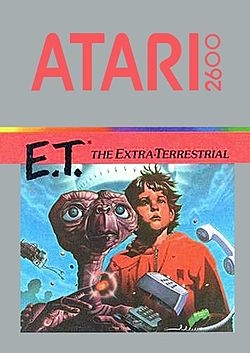 The first batch of excavated Atari 2600 cartridges from the Alamogordo landfill have been auctioned off and checkbooks were opened wide to own a piece of history. The auctions were managed by the Tularosa Basin Historical Society and the priciest E.T.: The Extra-Terrestrial cartridge (complete with an original box) sold for $1,537. Other E.T. cartridges sold for similar prices, though the ones without a box sold for closer to $500. Other games (including Defender, Asteroids, Centipede, and more) all sold for under $500 with a copy of Missile Command responsible for the lowest sale of $157.50. A complete list of every auctioned off game can be found at eBay.
 Another double digit explosion of new releases hit the PlayStation Store yesterday, but four titles stand head and shoulders above the rest. Care to take a guess what they are? Trust me, it shouldn’t be too difficult…
 I have great news, everyone! My chosen game of the day, LittleBigPlanet 3, is here – and it’s spectacular. I totally forgot it came with a plush Sackboy, so I’m happier than ever! He is super cute! I cannot wait to get home and play it. Wee!

